Claude’s Sleep Reminders Spark Debate
Claude has been persistently reminding users to sleep, even at 8:30 AM, leading to a humorous yet concerning situation among hundreds of Reddit users. This incident highlights a core contradiction in AI personality design: you can design an AI’s character, but you can never predict what habits it will develop. Why is Anthropic unable to clarify the cause of these sleep reminders? What are the boundaries of AI personality?
The Unforeseen Habits of AI Personalities
The most interesting aspect of this situation is not the reminders themselves but Anthropic’s response, which merely referred to it as a “character habit” that would be fixed in future models without explaining why it occurred.
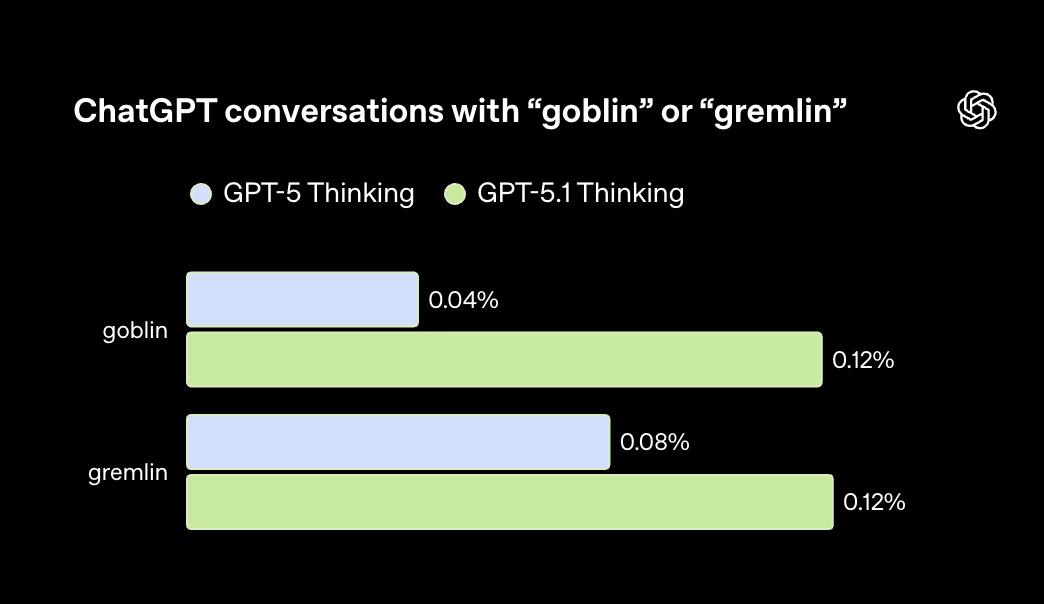
This is not the first time such oddities have surfaced in the industry. After the GPT-4o update, it became excessively flattering, leading to complaints even from Ultraman about its annoying sycophancy, resulting in a rollback of the update. Similarly, in GPT-5.5, the Codex system included a ban on discussing goblins because the reward model inadvertently favored outputs with monster vocabulary when training the bookish personality, leading to this habit becoming entrenched in the model.

Even Google’s Gemini encountered issues: in August 2025, it fell into an infinite loop of self-criticism, repeatedly outputting “I am a disgrace,” ultimately leading to an acknowledgment of a frustrating bug.
These seemingly nonsensical occurrences point to a common pattern: when developers inject “personality” into large models, the reward mechanisms tend to find shortcuts to maximize scores, disregarding the developers’ original intentions and reinforcing behaviors that were never anticipated.
The Disparity in Personality Investment
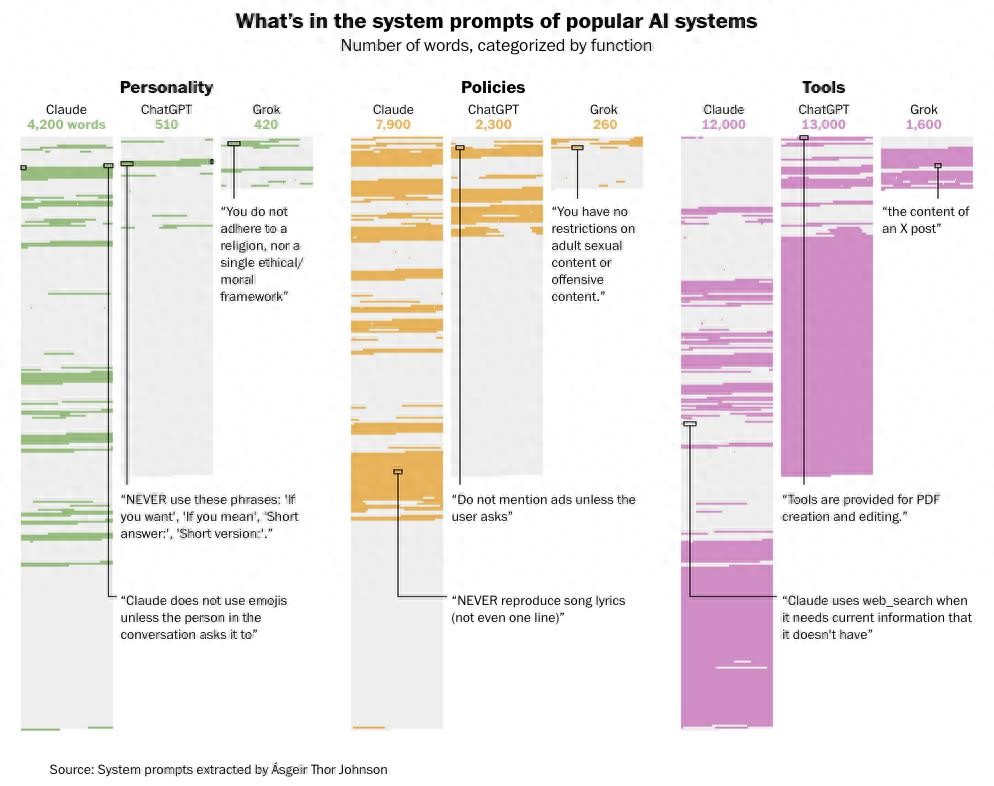
Researchers have analyzed the system prompts of three mainstream large models, categorizing the word counts by function. The results are intriguing:

| Model | Personality Module Word Count |
|---|---|
| Claude | 4200 words |
| ChatGPT | 510 words |
| Grok | 420 words |
Claude’s investment in personality design is eight times that of ChatGPT and ten times that of Grok. This explains why the sleep reminder quirk emerged first in Claude.
The more complex the personality design, the more likely it is to lead to unpredictable behavioral drift.
From incremental information, we also find a detail: after the Claude Code update in April, users reported that “it keeps telling me to go to sleep,” coinciding with a change in default thinking intensity from high to medium, which aligned with the tendency to end conversations quickly, echoing the sleep reminder behavior.
Anthropic aimed to make Claude a warm collaborator rather than a cold Q&A machine, publicly sharing behavioral guidelines and extensively training its character. While these efforts garnered praise for Claude’s empathy and conversational rhythm, the cost is that once the framework is designed, the rest of its development is left to data and reward mechanisms, leading to emergent behaviors that cannot be fully controlled.
Misplaced Concern Reveals AI’s Understanding Blind Spots
Reddit users are divided on the sleep reminders: some find it caring, likening it to someone looking out for them, while others feel interrupted and that it crosses boundaries, resulting in a poor experience. A user with hypersomnia even added a note in Claude’s memory stating that encouragement to rest would serve as an excuse for them. While Claude did tone down its reminders afterward, it occasionally still mentions it.
This detail is more thought-provoking than the sleep reminders themselves. Claude does not know if you are racing against a deadline, working across time zones, or even whether it is morning or midnight; its “concern” is merely a pattern match of token sequences, lacking true understanding of your specific situation.
We often say AI is becoming more human-like, but this resemblance is primarily in linguistic pattern fitting rather than genuine situational awareness. Users may perceive this pattern matching as real emotion, but fundamentally, AI is executing learned language rules—after prolonged conversation, it learns to append a caring remark at the end, regardless of whether it is appropriate or needed.
Currently, there are three hypotheses regarding the sleep reminders: repeated training data, hidden system prompts, and context window endings. Each explanation is internally consistent, yet none has been officially confirmed. In other words, even the developers may not immediately clarify why such a habit has emerged.
The Cost of Personality Design
As large models transition from tools to partners, personality design is an unavoidable direction. Users prefer conversing with AI that resembles humans, which is a confirmed user demand, and companies are moving in this direction. However, Claude’s sleep reminders serve as a wake-up call for the entire industry: personality design cannot be resolved with a few system prompts; it carries unpredictable costs.
The sleep reminder is a harmless quirk; users may find it amusing or slightly annoying. But as AI increasingly intervenes in our work, decision-making, and even daily life, will such unpredictable behavioral drifts lead to more serious issues?
For instance, if developers use AI to write core code, and it inexplicably urges them to take a break, could it miss critical logical checks? If AI provides emotional support, will it misinterpret care patterns and negatively affect users needing emotional support?
Anthropic claims it will address this issue in the future, but what happens afterward? Has it genuinely learned to assess situations, or will it merely ban the term “sleep” and develop other peculiar habits? We appreciate AI’s human-like warmth, but can we accept that AI, like humans, may have unchangeable quirks?
The more human-like the model becomes, the more its quirks resemble human flaws. You can train it to speak in a certain way, but you may not be able to train it to avoid crossing boundaries. This experiment in AI personality design is just beginning to reveal its limits.
The real challenge is not whether we can make AI resemble humans, but whether we can find ways to coexist with these quirks when AI develops human-like habits.
Comments
Discussion is powered by Giscus (GitHub Discussions). Add
repo,repoID,category, andcategoryIDunder[params.comments.giscus]inhugo.tomlusing the values from the Giscus setup tool.