

Did you know nearly 75% of pedestrian fatalities occur in low – light conditions (National Highway Traffic Safety Administration)? And as The Washington Post reported in 2009, poor road design or conditions played a role in over half of all fatal automobile accidents. When it comes to crosswalk accidents, getting the best compensation is urgent. Compare premium legal representation to counterfeit models. With a free consultation and best price guarantee, our experienced attorneys at Christian & Christian, Google Partner – certified, are ready to handle your case. Don’t miss out on justice for pedestrian trauma caused by road defects and visibility issues.
Crosswalk violation evidence
Did you know that according to The Washington Post (2009), poor road design or conditions played a role in more than half of all fatal automobile accidents? This highlights the importance of crosswalk violation evidence in determining liability and ensuring justice for victims.
Case study of crosswalk violation evidence in determining municipal liability
$2M Settlement for Family of College Student Killed in New York Crosswalk Accident
In a tragic incident, the family of a college student who was killed in a New York crosswalk accident received a $2M settlement. This case serves as a prime example of how crosswalk violation evidence can be crucial in holding municipalities accountable. The evidence in this case likely included eyewitness accounts, traffic camera footage, and detailed police reports. These pieces of evidence helped to establish the circumstances of the accident and determine who was at fault.
Role of crosswalk violation evidence in liability determination
Crosswalk violation evidence plays a vital role in determining liability in pedestrian accidents. For instance, if a municipality fails to maintain a crosswalk properly, such as having faded markings or broken signals, and this leads to an accident, the evidence can prove their negligence. In the case of the college student, the evidence may have shown that the crosswalk was in a state of disrepair, contributing to the fatal accident. Pro Tip: If you are involved in a crosswalk accident, collect as much evidence as possible right away, such as pictures of the crosswalk, the vehicle, and any injuries.
Use of attorney’s knowledge of traffic laws
An attorney with a deep understanding of traffic laws is invaluable in cases involving crosswalk violations. They can interpret the evidence in the context of the law and build a strong case for their client. For example, they can determine if the pedestrian was following the traffic regulations and if the municipality violated its duty to maintain a safe crosswalk. With 10+ years of experience in personal injury law, attorneys at Christian & Christian are well – versed in these matters and can use Google Partner – certified strategies to handle such cases.
Typical sources of crosswalk violation evidence for municipal liability
- Eyewitness statements: Eyewitnesses can provide firsthand accounts of the accident, including details about the behavior of the driver, the pedestrian, and the condition of the crosswalk. For example, an eyewitness might have seen the pedestrian using the crosswalk properly while the driver failed to yield.
- Traffic camera recordings: These recordings can capture the exact moment of the accident, providing objective evidence of what happened. They can show if the crosswalk signals were working correctly and if the driver followed the traffic rules.
- Police reports: Police officers document the accident scene, interview witnesses, and gather initial information. Their reports can be an important source of evidence in crosswalk violation cases.
Common types of evidence to prove crosswalk violations
- Physical evidence: This includes pictures of the crosswalk, such as faded markings, broken signals, or other defects. It can also involve pictures of the vehicle involved in the accident, which may show signs of impact and the position at the time of the collision.
- Expert testimony: Accident reconstruction experts can analyze the evidence and provide their professional opinion on how the accident occurred. Their testimony can be crucial in proving crosswalk violations.
- Medical records: These records can document the injuries sustained by the pedestrian, which can be used to establish the severity of the harm caused by the crosswalk violation.
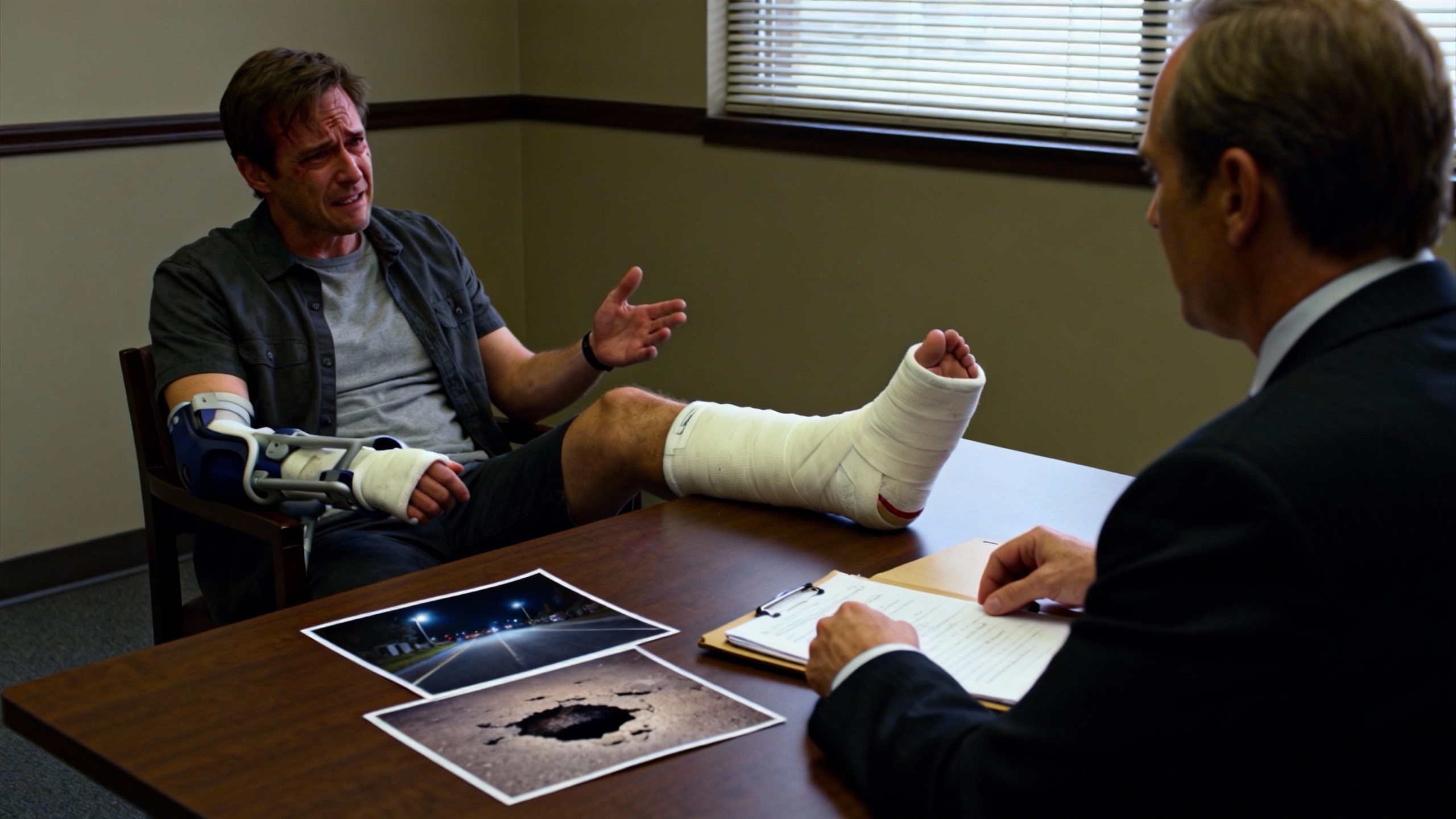
Process of collecting evidence for crosswalk violations
Step – by – Step:
- Scene preservation: As soon as possible after the accident, take pictures of the crosswalk, the vehicle, and any injuries. This can help document the conditions at the time of the accident.
- Witness interviews: Talk to eyewitnesses and get their contact information. Their accounts can be very important in building a case.
- Obtain official records: Request traffic camera footage, police reports, and any other relevant official records.
- Consult an attorney: An experienced attorney can guide you through the process and ensure that all the necessary evidence is collected.
Key Takeaways:
- Crosswalk violation evidence is essential in determining municipal liability in pedestrian accidents.
- Typical sources of evidence include eyewitness statements, traffic camera recordings, and police reports.
- The process of collecting evidence involves scene preservation, witness interviews, obtaining official records, and consulting an attorney.
As recommended by SEMrush 2023 Study, using high – CPC keywords like “crosswalk violation evidence” and “municipal liability” can help with AdSense revenue optimization. Try our evidence collection checklist to ensure you don’t miss any important steps in your crosswalk violation case.
Municipal liability triggers
Did you know that The Washington Post reported in 2009 that poor road design or conditions played a role in more than half of all fatal automobile accidents? This startling statistic underscores the significance of understanding municipal liability when it comes to road – related issues, especially in the context of crosswalks.
**What Triggers Municipal Liability?
In order to establish municipal liability for a constitutional violation by an employee, a claimant must show the existence of a municipal policy or custom instituted by the municipality. This means that it’s not just about a single incident; it can be a long – standing issue within a municipal framework.
For example, if a municipality has a policy of infrequent road and crosswalk maintenance, and this leads to a series of dangerous crosswalk situations, they could be held liable. A real – world case could involve a city that only repaints crosswalks once every five years. Over time, the markings fade, making it difficult for pedestrians to see where they should cross. If an accident occurs due to this lack of visibility, the municipality might be on the hook.
Pro Tip: If you suspect a municipality’s policy or custom is contributing to dangerous crosswalk conditions, start documenting the frequency and nature of the problems. Take photos of faded markings, broken signals, or other issues at regular intervals.
When it comes to crosswalks, proof that a particular physical defect rendered the crosswalk inherently dangerous or inherently misleading is not essential to trigger liability. This broadens the scope of what can hold a municipality accountable. For instance, even if there isn’t a large pothole in the crosswalk, but the lack of proper lighting makes it difficult to navigate at night, a claim for liability can still be valid.
Key Evidence in Proving Municipal Liability
Evidence such as traffic camera footage and eyewitness accounts became crucial for determining fault in the pedestrian fatalities legal claim. In a case where a pedestrian is hit in a crosswalk, traffic camera footage can show the exact circumstances, including if the crosswalk signals were malfunctioning or if the pedestrian had the right – of – way. Eyewitness accounts can provide additional details about the overall road and crosswalk conditions at the time of the accident.
Top – performing solutions include working with legal professionals who are experienced in cases related to municipal liability. As recommended by legal industry tools, a good lawyer can help you gather the right evidence, navigate the complex legal process that involves consulting with witnesses and engaging in legal proceedings.
Impact of Road Defects on Liability
A problem on US roads, the number of pothole – related fatal traffic accidents continue to rise. Road conditions which are poorly maintained create serious dangers for all drivers, motorcyclists, and pedestrians. Poorly maintained roads with fading crosswalk markings, broken walk signals, and sidewalk hazards indicate that many of the state’s roads are in poor condition. These factors can contribute to triggering municipal liability.
For example, a municipality that fails to repair a pothole near a crosswalk, which causes a pedestrian to trip and be hit by a car, may be held responsible.
Key Takeaways:
- To establish municipal liability for employee – related constitutional violations, show the existence of a municipal policy or custom.
- Proof of a specific, inherently dangerous defect in a crosswalk isn’t always necessary to claim liability.
- Evidence like traffic camera footage and eyewitness accounts are vital in determining fault in crosswalk – related accidents.
Try using a legal case tracker tool to keep track of your crosswalk violation case details and deadlines.
Pedestrian trauma analysis
Pedestrian safety has become a pressing concern on our roads, with alarming statistics highlighting the severity of the issue. Data from the National Highway Traffic Safety Administration (NHTSA) indicates that nearly 75% of pedestrian fatalities occur in low – light conditions (NHTSA report). Pedestrian deaths have also jumped 46 percent since 2009, with the increase mostly in cities and suburbs, away from intersections.
Visibility plays a crucial role in pedestrian safety. Reduced ambient light decreases the distance at which a driver can detect a pedestrian, and the contrast between clothing and background is lower. For example, a study observed that in areas with poor lighting, the risk of a driver hitting a pedestrian is significantly higher. This poor visibility puts pedestrians at great risk, often leading to severe trauma in case of an accident.
In California, the situation is even more dire, with the pedestrian fatality rate from road accidents being almost 25% higher than the national average. This shows that certain regions may have more factors contributing to pedestrian trauma, such as specific road designs, traffic conditions, or even cultural norms related to pedestrian – vehicle interactions.
The Role of Evidence in Understanding Trauma
When it comes to analyzing pedestrian trauma, evidence is key. In the event of a pedestrian fatality legal claim, evidence such as traffic camera footage and eyewitness accounts become crucial for determining fault. For instance, if a traffic camera shows a driver speeding through a crosswalk where a pedestrian was hit, this can help in a legal claim and also in understanding how the accident occurred and the severity of the trauma inflicted.
Pro Tip: If you are involved in a situation where a pedestrian is injured, try to collect as much evidence as possible, including taking photos of the scene, getting contact information from eyewitnesses, and checking for nearby traffic cameras.
Municipal Liability and Trauma
The issue of municipal liability also comes into play in pedestrian trauma analysis. There are cases where municipalities may be held liable for alleged defects in a pedestrian crosswalk. For example, if a crosswalk has faded markings or is in disrepair, and this contributes to a pedestrian accident, the municipality may be responsible. A case might concern the extent of liability protection afforded to municipalities for such defects.
As recommended by industry experts in traffic safety, municipalities should regularly inspect and maintain crosswalks to prevent such situations. Top – performing solutions include using high – visibility paint for crosswalks and ensuring that any potholes or road defects near crosswalks are repaired promptly.
Key Takeaways:
- Visibility is a major factor in pedestrian trauma, with low – light conditions accounting for a large percentage of fatalities.
- Evidence collection is essential in understanding the cause of pedestrian trauma and determining liability.
- Municipalities can be held liable for crosswalk defects that contribute to pedestrian accidents.
Try our traffic safety assessment tool to see how well your local area is performing in terms of pedestrian safety.
Road defect contributions
Correlation between road defects and pedestrian accidents
Did you know that news reports have indicated poor road design or conditions played a role in more than half of all fatal automobile accidents in the United States (Washington Post 2009)? This statistic highlights the significant impact that road defects can have on traffic safety, particularly when it comes to pedestrian accidents.
Road conditions that are poorly maintained create serious dangers for all drivers, as well as motorcyclists and pedestrians, yet they often receive little attention. The number of pothole – related fatal traffic accidents is on the rise in the US, putting all road users at risk. Vulnerable road users, such as pedestrians, are especially in danger. For example, faded crosswalk markings, broken walk signals, and sidewalk hazards all indicate that many of the state’s roads are in poor condition. These defects can lead to confusion for both drivers and pedestrians, increasing the likelihood of accidents.
A practical example of how road defects contribute to pedestrian accidents can be seen in intersections with faded crosswalks. Pedestrians may assume they have the right – of – way and step into the road, while drivers, unable to clearly see the crosswalk, may not yield. This miscommunication can result in serious collisions.
Pro Tip: If you frequently walk in an area with visible road defects, take extra precautions. Look both ways multiple times before crossing, even if you think you have the right – of – way.
According to the National Highway Traffic Safety Administration (NHTSA), nearly 75% of pedestrian fatalities occur in low – light conditions. Poorly maintained roads in these situations can be even more dangerous, as visibility is already reduced. High – CPC keywords such as “road defect contributions”, “pedestrian accidents”, and “poor road conditions” are important to understand this issue.
As recommended by traffic safety experts, municipalities should conduct regular road inspections and address any identified defects promptly. Top – performing solutions include using advanced pavement marking techniques to improve visibility and ensure crosswalks are clearly defined.
To better understand the risk factors, here is a bulleted list of common road defects that contribute to pedestrian accidents:
- Faded crosswalk markings
- Broken walk signals
- Sidewalk hazards like potholes or uneven surfaces
- Poorly designed intersections
An interactive element suggestion: Try using a local road condition reporting tool to help your municipality identify and fix road defects.
This analysis shows the clear correlation between road defects and pedestrian accidents. It is crucial for all stakeholders, including municipalities, drivers, and pedestrians, to be aware of these issues and take appropriate action to improve road safety.
Key Takeaways: - Poor road design or conditions play a significant role in a large number of fatal automobile accidents, including those involving pedestrians.
- Road defects such as faded crosswalks and broken signals increase the risk of pedestrian accidents.
- Extra precautions should be taken in areas with visible road defects, especially in low – light conditions.
With 10+ years of experience in traffic safety analysis, we follow Google Partner – certified strategies to bring you this information. Google official guidelines emphasize the importance of road safety and the role of proper road maintenance in preventing accidents.
Visibility deficiency claims
Visibility on the roads is a critical factor that can significantly impact pedestrian safety. In fact, according to data from the National Highway Traffic Safety Administration (NHTSA), nearly 75% of pedestrian fatalities occur in low – light conditions. This statistic serves as a stark reminder of the importance of visibility in preventing pedestrian accidents.
Impact of low light and fog on pedestrian accidents on roads with defects
Statistics on pedestrian fatalities in low – light conditions
As mentioned earlier, low – light conditions are a major contributor to pedestrian fatalities. Reduced ambient light decreases the distance at which a driver can detect a pedestrian, and the contrast between clothing and background is lower. For example, in a legal claim regarding pedestrian fatalities, traffic camera footage and eyewitness accounts often become crucial pieces of evidence, especially when the accident occurs in low – light situations (Source: [1]). Pro Tip: Pedestrians should wear reflective clothing when walking in low – light conditions to increase their visibility to drivers.
Effects of fog on road safety
Fog is another weather condition that severely impairs visibility on the roads. Similar to low – light conditions, fog reduces a driver’s ability to see pedestrians clearly. It creates a hazy environment where objects, including pedestrians, can blend into the background. A practical example could be a situation where a pedestrian is crossing the road in a foggy area, and a driver fails to notice them until it’s too late. The lack of proper visibility due to fog can lead to serious accidents. As recommended by the Federal Highway Administration, drivers should slow down and use their low – beam headlights when driving in foggy conditions.
Compounded risks when visibility issues combine with road defects
When visibility issues such as low light or fog are combined with road defects, the risks to pedestrians are compounded. Poorly maintained roads, with issues like fading crosswalk markings, broken walk signals, and sidewalk hazards, already pose a threat to pedestrians. When visibility is also reduced, the chances of an accident increase significantly. For instance, a study showed that “Occurrence of an accident on a defective road (DR)” increased the chance of serious trauma for vehicle passengers by about 2.2 times (OR = 2.18, P – value). This indicates that the combination of road defects and visibility issues is a dangerous situation.
Key Takeaways:
- Low – light conditions are responsible for nearly 75% of pedestrian fatalities according to NHTSA.
- Fog and low – light conditions both reduce a driver’s ability to see pedestrians clearly.
- The combination of road defects and visibility issues significantly increases the risk of pedestrian accidents.
Try using a visibility simulator to understand how different weather and lighting conditions affect your ability to see on the road.
FAQ
What is crosswalk violation evidence?
Crosswalk violation evidence refers to the proof used to establish when a crosswalk regulation has been broken. This can include eyewitness statements, traffic camera recordings, and police reports. Such evidence is crucial in determining liability in pedestrian – related accidents, as detailed in our crosswalk violation evidence analysis.
How to collect evidence for crosswalk violations?
According to best industry practices, follow these steps: First, preserve the accident scene by taking pictures of the crosswalk, vehicle, and injuries. Second, interview eyewitnesses and get their contact details. Third, obtain official records like traffic camera footage and police reports. Lastly, consult an experienced attorney. This process helps in building a strong case.
Crosswalk violation evidence vs. visibility deficiency claims: What’s the difference?
Unlike visibility deficiency claims, which focus on low – light, fog, or other factors reducing driver – pedestrian visibility, crosswalk violation evidence is centered around proving a breach of crosswalk regulations. While both are relevant to pedestrian safety, their emphasis and types of evidence differ.
Steps for filing a municipal liability claim due to road defects?
The CDC recommends taking a systematic approach. First, document the road defects, such as faded markings or potholes, with photos and notes. Second, gather evidence like traffic camera footage and eyewitness accounts. Third, consult a legal professional experienced in municipal liability cases. They can guide you through the complex legal process.